 Matt Farnham
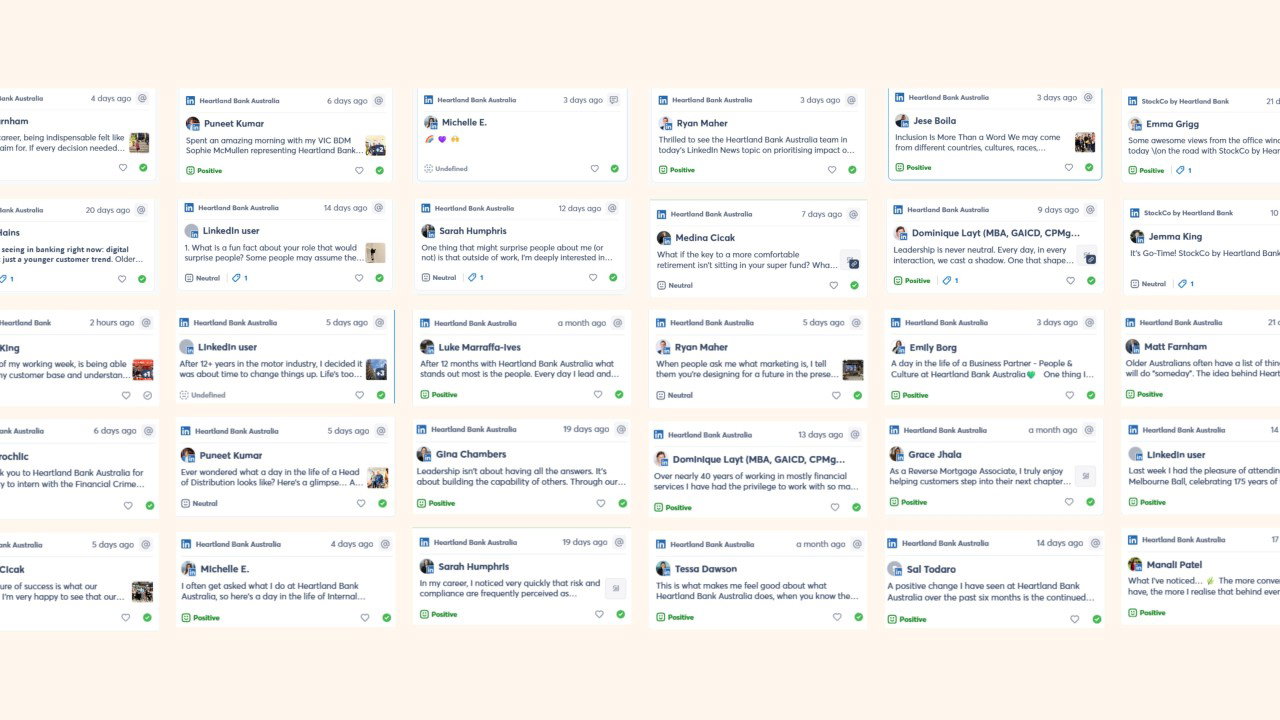
Heartland Bank Australia tested a different approach to employee advocacy: instead of asking employees to promote company content, it ran an eight-week voluntary LinkedIn Sprint to help them share their own work and professional experiences. Weekly prompts, visible leadership participation and simple privacy and confidentiality guardrails made it easier for employees to post in their own voice. Compared with the previous eight weeks, Heartland’s company page recorded 43.9% more new followers, 102.2% more total engagements and a 73.7% higher engagement rate, without paid promotion or incentives. As other activity continued during the Sprint, these results show an association rather than proof of causation. The case suggests employee advocacy can support audience growth when organisations reduce the friction to participate instead of treating employees as another marketing channel.
Employee advocacy is often approached backwards. Organisations start with the company and ask how they can get employees to promote its content. Marketing creates the message, provides the wording and employees become another distribution channel.
I wanted to test a different approach at Heartland Bank Australia. Instead of asking employees to promote the company, what if we helped them become more confident talking about their own work, careers and professional experiences?
That question became an eight-week LinkedIn Sprint built around weekly prompts, visible leadership participation and a handful of simple guardrails. Compared with the preceding eight weeks, Heartland's company page recorded a 43.9% increase in new followers, a 102.2% increase in total engagements and a 73.7% improvement in engagement rate. There was no paid promotion attached to the Sprint. The sprint ran through both July and August 2026.
What the Sprint involved
The Sprint was an eight-week, voluntary program across the company. Each Monday, employees received a theme, several prompts and example starting points. They could respond by writing one post in their own voice or by 'reposting with their thoughts' one relevant post that they saw on LinkedIn.
The themes covered a range of topics from personal and accessible topics, such as what makes me proud to work here and a day in the life, into subjects including customer impact, industry observations, common misconceptions and inclusion. Optional support was available for anyone who wanted help shaping a post, leaders were encouraged to participate visibly, and employee contributions were highlighted internally each Friday.
The structure was deliberately light. One useful contribution a week was the invitation, not a quota, and participation was encouraged rather than required.
The problem I was trying to solve
Heartland already had people with valuable experience, expertise and stories worth sharing. The challenge was that only a relatively small group were consistently active on LinkedIn.
The barrier was not a lack of things to say. It was the friction involved in saying them. What should I write about? Is my experience interesting enough? Am I allowed to talk about this? Where are the boundaries? Does it need to be perfectly polished before I post it?
The traditional employee advocacy response is to remove that friction by giving people something ready-made to share. That solves the empty-page problem, but it creates another one. If everyone is publishing versions of the same corporate message, the employee becomes another distribution channel for marketing rather than someone with a perspective of their own.
I wanted to see whether we could remove the friction without removing the person.
Prompts, permission and guardrails
The model was remarkably simple: prompts, permission and guardrails.
Prompts reduced the effort required to get started. Telling someone to "be more active on LinkedIn" still leaves them to decide on the topic, angle and whether the idea is worth sharing. We built out a prompt and suggested ‘starting points’ for each week. A weekly theme narrowed the starting point without dictating the answer, and gave our team members a jumping off point for their own voice.
Employee advocacy is stronger when employees see personal value in participating, whether through building their profile, sharing knowledge or recognising work they are proud of. Visible participation from leaders can reinforce that value by making advocacy feel supported, not simply promoted by marketing. Research by Lee and Kim (2020) suggests employees advocate for both organisational and personal reasons, including self-enhancement, altruism and enjoyment. Thelen and Yue (2021) similarly linked leadership with employee advocacy, reinforcing the value of visible leader participation. View the study, View the study
The thing our friends in risk and corporate comms will care about - guardrails. Employees were reminded not to share customer details, confidential or commercially sensitive information, anything misleading, or information that compromised the privacy of colleagues or partners. The practical reminder was simple: protect customer and colleague privacy, do not disclose confidential or commercially sensitive information, and do not make misleading claims. As a final sense check, if you would not be comfortable seeing it reported publicly, do not post it.
If you would not be comfortable seeing it on the news, do not post it.
Particularly in a regulated environment, telling employees to "just be authentic" without giving them boundaries would have been irresponsible. But an extensive approval process would have recreated the hesitation we were trying to remove. The aim was to give people enough guidance to exercise judgement themselves, not attach a compliance process to every LinkedIn post.
That voluntary element also matters. Verhoeven and Thøis Madsen (2022) noted that employees increasingly perform communication roles alongside their actual jobs, but warn that these additional expectations can contribute to role overload, conflict and stress. Personal LinkedIn profiles belong to employees. Encouraging people to participate is very different from making public advocacy another requirement of their job. View the study
What changed
The strongest result was not simply increased visibility. Total engagements more than doubled and engagement rate improved by 73.7%. During the Sprint, interactions with Heartland’s company-page content increased materially, rather than the result being limited to additional impressions.
Importantly, there was no paid promotion, incentive or media spend attached to the Sprint. The investment was employee time and participation.
Four lessons from eight weeks
1. Give people somewhere to start
Most people did not need extensive LinkedIn training. They needed help getting past the empty text box. The weekly prompts provided structure without scripting the answer, which meant employees still had to bring their own experience and perspective to the post.
There is a useful line between too little and too much structure. Too little leaves people wondering what to say. Too much produces content that could have come from anybody.
2. Create genuine permission to participate
Leadership involvement mattered because it demonstrated that having a professional voice was genuinely supported. Leaders did more than endorse the Sprint. By participating and engaging with others, they helped make the behaviour feel normal.
That is different from an email telling everyone they should post more. If organisations want employees to speak publicly, employees need to see that leaders are comfortable with them doing it.
3. Keep the guardrails simple
We needed boundaries, particularly in financial services, but we did not need an approval workflow attached to every post. A few clear principles gave people enough information to make sensible decisions themselves.
The goal was confidence, not control. Good guardrails should make it easier to participate safely, not make employees so conscious of potential risk that they decide saying nothing is safer.
4. Do not polish the person out of the content
Authenticity does not mean poor writing, oversharing or being deliberately casual. It means the person's point of view remains visible.
A well-written post can still sound like a human being. The problem comes when every unusual phrase, personal observation or individual perspective is removed until the employee's post reads exactly like the company page.
This was a live organisational initiative, not a controlled experiment. Heartland continued other marketing, communications and business activity during the eight weeks, so I would not claim that the Sprint caused every improvement in company-page performance.
What we can say is that the period of increased employee participation coincided with substantial improvements across follower growth, clicks, reactions, engagements and engagement rate compared with the preceding eight weeks. That is enough to make the result worth paying attention to, without pretending a real-world case study can establish causation.
What changed in my thinking
I started the Sprint thinking about employee advocacy as a content problem: how do we get more of our people talking about Heartland and the work happening here?
Eight weeks later, I think that was the wrong problem to solve.
Our people already had plenty to say. The challenge was making it easier to say it. The prompts helped people start, leadership participation showed that it was genuinely supported, and the guardrails made the boundaries clear. After that, our job was largely to get out of the way.
The learning for me is that good employee advocacy isn't really about creating more content for employees. It's about removing enough friction that people feel confident creating their own.
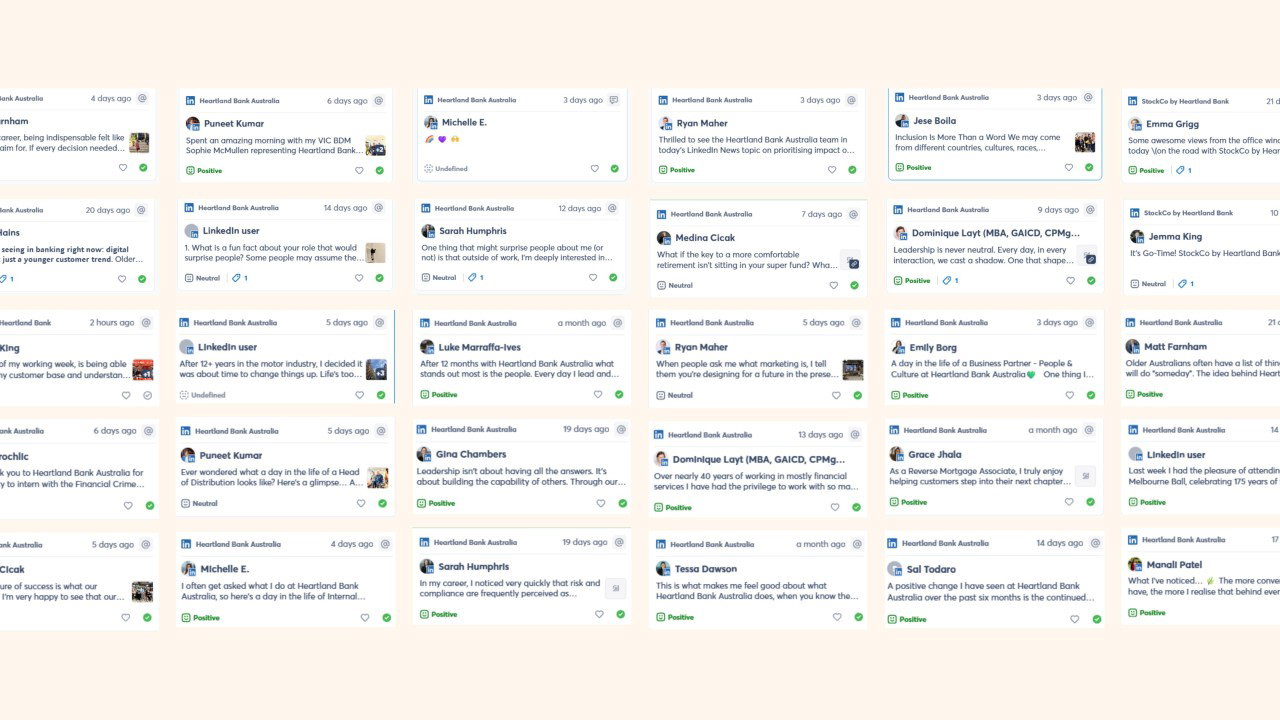
As a live organisational initiative, the sprint cannot establish causation. What it does show is that increased employee participation coincided with substantial improvements across key company-page metrics, making the results worth paying attention to.
Where the idea came from
The original spark came from a post by Georgia Franc at The Inside Network about a company-wide LinkedIn Sprint. I liked the idea of making the activity finite and structured rather than launching another ongoing internal initiative with no obvious beginning or end.
Heartland needed a different version. We operate in financial services, so there were legitimate privacy, confidentiality and reputational considerations. I also did not want the Sprint to become a contest for producing the most content, or eight weeks of employees repeating company messaging.
Instead, I built it around weekly themes that gave people a starting point while leaving the story up to them. Employees might reflect on something their career had taught them, a challenge they had overcome, work they were proud of or someone who had influenced their development. The prompts removed the question of "what could I possibly post about?" without replacing it with "here is what we want you to say."

Matt Farnham is an award-winning senior marketing leader with more than a decade of experience in brand, communications and customer engagement. His work has focused on helping organisations build trust, strengthen customer relationships and drive sustainable growth, particularly in highly regulated industries. In 2024, he was named Future Leader of the Year at the Australian Marketing Institute Marketing Excellence Awards. He writes about brand strategy, marketing effectiveness and customer behaviour at mattfarnham.au.
The Relationship Between Trust and Memory.
References
Lee, Y. & Kim, K.H. (2020). 'Enhancing employee advocacy on social media: the value of internal relationship management approach'. Corporate Communications: An International Journal, 26(2), 311-327. View the study
Thelen, P.D. & Yue, C.A. (2021). 'Servant Leadership and Employee Advocacy: The Mediating Role of Psychological Empowerment and Perceived Relationship Investment'. International Journal of Communication, 15, 3802-3826. View the study
Verhoeven, J.W.M. & Thøis Madsen, V. (2022). 'Active Employee Communication Roles in Organizations: A Framework for Understanding and Discussing Communication Role Expectations'. International Journal of Strategic Communication, 16(1), 91-110. View the study
Matt Farnham is an award-winning senior marketing leader with more than a decade of experience in brand, communications and customer engagement. His work has focused on helping organisations build trust, strengthen customer relationships and drive sustainable growth, particularly in highly regulated industries. In 2024, he was named Future Leader of the Year at the Australian Marketing Institute Marketing Excellence Awards. He writes about brand strategy, marketing effectiveness and customer behaviour at mattfarnham.au.